


2024
Un-Build
Un-Build
work with Tobis Kurpat
2024
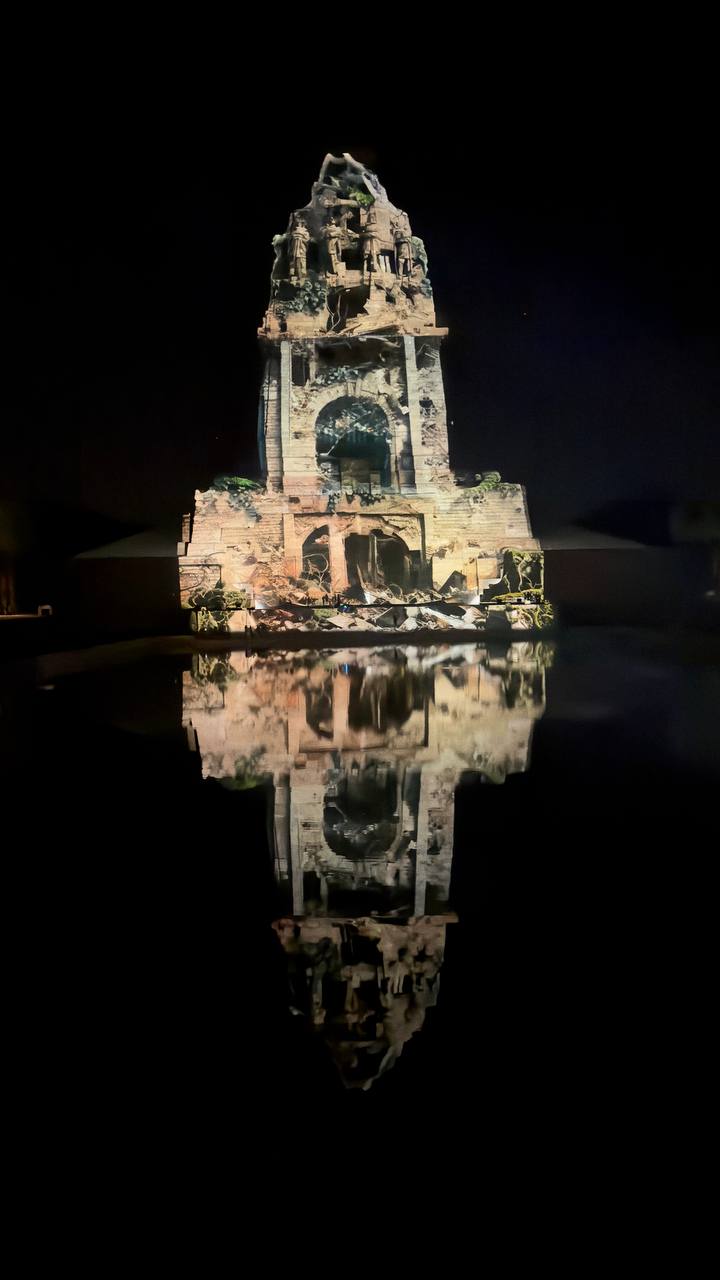
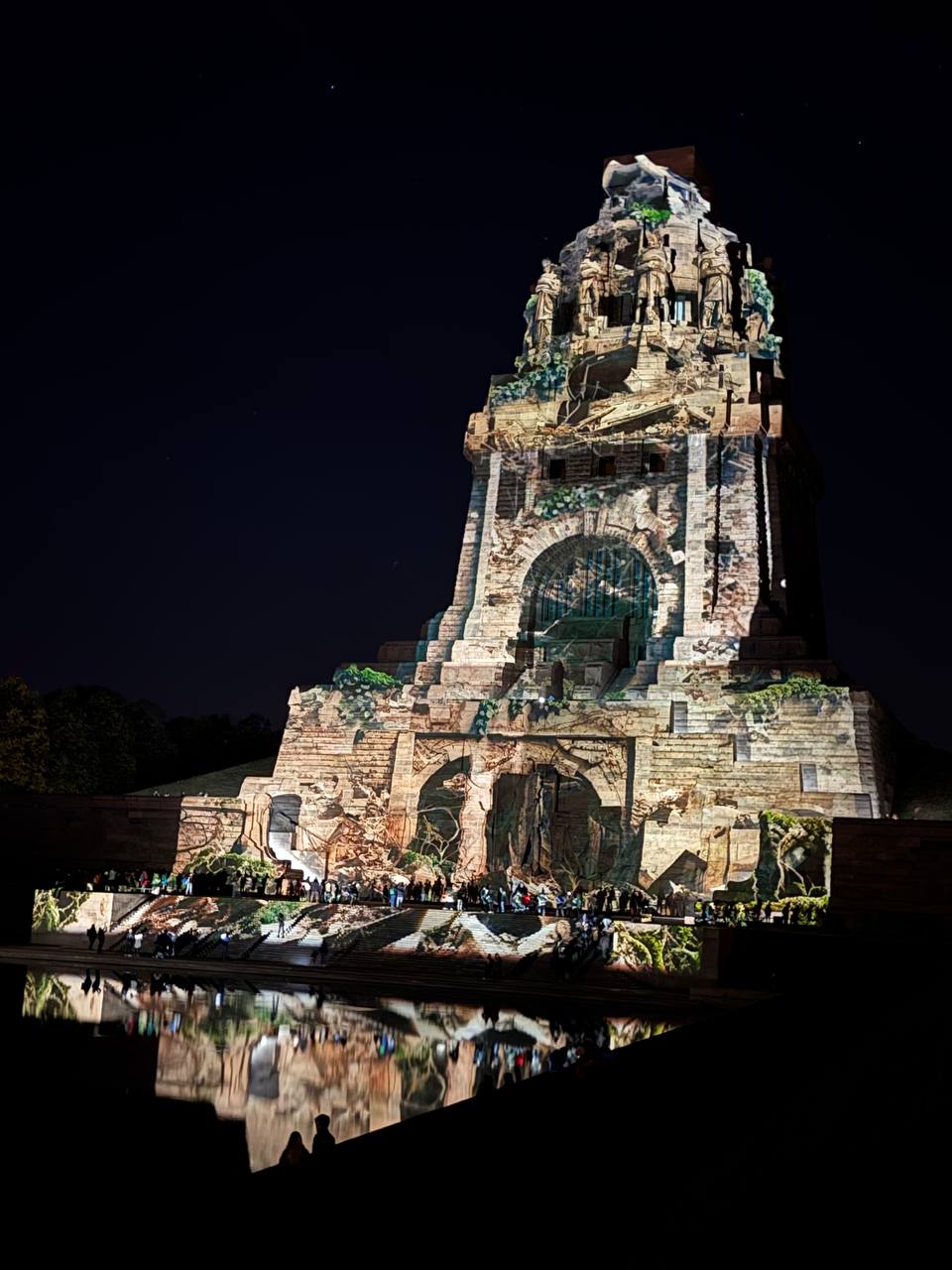
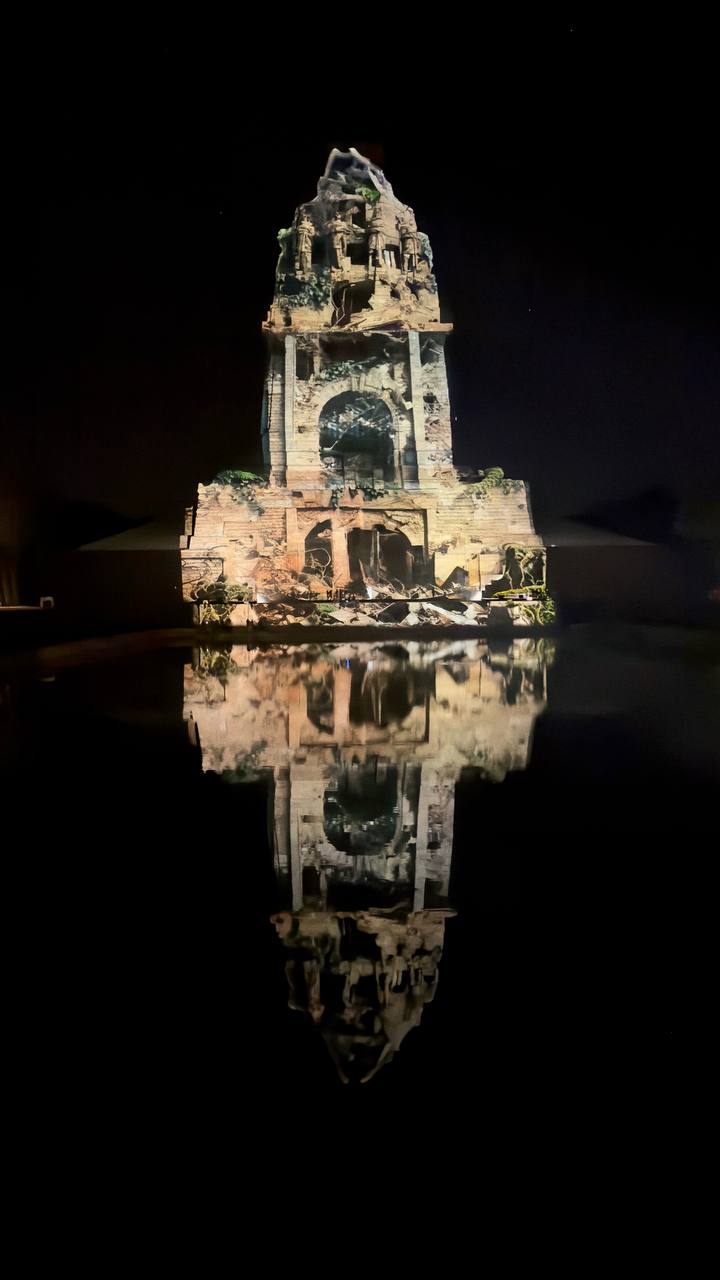
AI-generated collage
Analogous projection on the monument Völkerschlachtdenkmal
The artistic work stages the Monument to the Battle of the Nations in a state of progressive decay, in which the monument is depicted overgrown by plants and partially crumbled into rubble. This visual deconstruction of the monument offers a critical reflection on the symbolic meaning that the building embodies historically. Originally erected as a memorial to the victory over Napoleon, the monument stands for nationalist and militaristic ideologies that were seen as central to German identity in the past.
The staged decay questions these traditional symbols of power and domination. The decay of the monument serves as a metaphor for the gradual collapse of patriarchal and nationalist structures that continue to have an impact today. At the same time, the depiction opens up space for a reinterpretation of the past: the overgrowth of the concrete structure by nature points to the transformative power of time and the desire to overcome old ideologies and power structures in favor of a more open, more equal society.
In this artistic exploration, the natural erosion of the building is not interpreted as destruction, but as renewal – a reconquest by nature, which symbolically “repairs” the monumental concrete structure by stripping it of its former dominance. The work thus calls not only for a critical questioning of the historical narratives that the monument represents, but also for a reflection on how our contemporary society should deal with such monuments and the ideologies associated with them.
The investigation into the coal extraction chain in Colombia reveals a complex ecosystem where the interests of Global North countries, like Germany, depend on the exploitation of Global South territories. El Cerrejón, the largest open-pit coal mine in Latin America, stands in La Guajira as a symbol of this extractivism. “They even stole the name,” say the local inhabitants, as El Cerrejón was once a sacred hill, a seven-faced hill that looked different from every angle, and now lies at its feet the largest open-pit mine in Latin America. For many, what is seen as progress in other parts of the world is a devastating reality in this territory: “The paradise of some is the hell of others.”
The interdependence between Germany and Colombia in the coal trade is more evident than ever. In recent years, Germany has sought to compensate for the lack of Russian gas due to the war in Ukraine and the sanctions imposed on Russia by turning to Colombian coal. Paradoxically, while Germany imports this resource from the Global South, it has announced plans to completely eliminate coal mining in its own territory by 2030, in an effort to move towards a cleaner energy transition.
The context driving this investigation dates back to 2022, when organizations like Unidas por la Paz and other international collectives sent a letter to the German government asking them not to reactivate the importation of Colombian coal. This request highlighted the contradiction between Germany’s environmental commitments and its reliance on energy resources extracted under conditions of social and environmental injustice in countries like Colombia.
The research focuses on La Guajira, in northern Colombia, particularly on the community of Barrancas, where the mine has deeply affected the lives of the Wayuu communities, both in their economy and social fabric. Inequality in access to resources is evident. Water, a scarce resource in this semi-desert region, is one of the major points of conflict. The Ranchería River, vital to the region, was dammed in the Caracolí community with the promise of alleviating the drought that affects La Guajira. However, much of this resource has been diverted for the industrial interests of El Cerrejón, exacerbating the inequality in its distribution.
The mine’s magnitude is such that it can be compared to the size of a city like Hamburg, and its extension covers the area from Barrancas to Albania. From the depths of the mine in Barrancas, the mineral is transported by one of the few active railways in the country, headed to Puerto Bolívar in Upper Guajira. This port, once a regional trading hub, is now exclusively used for exporting coal to Europe. Along this route, many communities have been displaced or their lands purchased by the multinational to allow the expansion of mining, generating internal conflicts and divisions.
A key component of the research is the impact on the Arroyo Bruno, a vital tributary that was partially channeled to allow the mine’s expansion. The Arroyo Bruno has been recognized as a subject of rights for a few years, temporarily halting mining progress in this area. However, the future of the stream remains uncertain, constantly under threat from industry interests. The channeling has affected its natural flow, and although there are legal resistances, the stream symbolizes the unequal battle between environmental conservation and extractive forces.
Through this research, it becomes evident that coal, as it is transported from the depths of the earth to international markets, carries with it the stories of destruction and resistance from a territory that faces, day by day, the consequences of a model that benefits a few at the expense of many.